Showing posts with label Brian Eno. Show all posts

Sunday, March 26, 2017

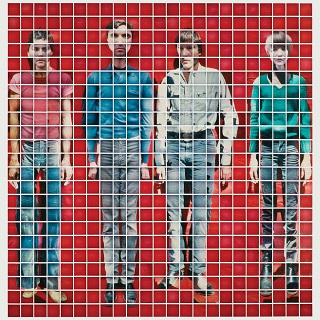
#423: Talking Heads - More Songs About Buildings and Food (1978)


Zack: Just about 6 years later, we finally got around to listening to our second Talking Heads album. It’s hard to explain how powerfully deflating that sentence was to type. Anyway, last time I found Talking Heads to be pretty interesting but remarkably pretentious. I didn’t pick up on the pretentiousness this time around (and Wikipedia did not have as an-depth of a discussion about it), but I also didn’t find the music as compelling. I frequently forgot that the album was even playing, and I can’t say I was doing anything terrible exciting while I listened to it. The album had a few songs that I started tapping my feet to, but beyond that it just sounded pretty conventional, which was kind of a downer coming from a band that once wrote a protest song aimed at the atmosphere.
Favorite Tracks: Take Me to the River; With Our Love; I’m Not In Love

Emily: As a fan of both buildings and food, I liked this album based on its title alone. It's kinda goofy and has immense parody potential, provided the songs live up to the promise of the title. I don't really think they did. I didn't pick up on any overt discussions of either food or buildings, but perhaps they were going for something more subtle than silly. The album itself was perfectly pleasant, with a few fun and upbeat songs and an especially good Al Green cover. But I feel like it could have done something more, even though I'm not exactly sure what that "more" is.
Favorite Tracks: Take Me to the River; Thank You for Sending Me an Angel; I'm Not in Love

Sunday, November 27, 2016

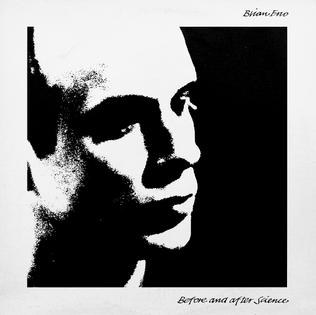
#409: Brian Eno - Before and After Science (1977)


Zack: I have a pretty special attachment to Eno’s Here Comes the Warm Jets because I listened to it the day I moved into my first grown-up apartment in North Philly. We hadn’t installed internet yet, so I didn’t have much to do besides listen to albums for the blog (wow, times were different) and this one just so happened to be the first one up. As soon as my mom left – she and I moved all of my worldly possessions including a bed, desk, and dresser up 3 flights of very narrow and twisty stairs – I set my old laptop up on the dresser and got to work. I’ve relistened to that album maybe 6 or 7 times since then, always just to feel nostalgic for when my major life stresses were finding a job and getting someone to buy me alcohol rather than health insurance and that moment of prayer between when you hit run on your do file and when you see the results. It’s a pretty good album. Outside of my normal wheelhouse, but something that I find it quite enjoyable every once in a while. I can’t imagine that I’ll develop a sentimental attachment to Before and After Science that will rival that, but it may be the better album anyway. I’ll admit, the first handful of tracks really threw me for a loop. I was not into them at all. But after that, the album settled into a nice groove and I really appreciated the vibe it was putting out. I guess I really prefer things after science. Those songs were sort of cold and distant, but sort of soothing. There was something…inevitable to the music. I guess I would describe it as sort of anti-jazz. All the life and vibrancy that makes jazz so great was absent, but it sort of became its own thing. I know that doesn’t make it sound too inviting, but I don’t really know how to explain it any better than that.
Favorite Tracks: Julie With…; King’s Lead Hat; Energy Fools the Magician

Emily: The title of this album evokes a grand scope, envisioning a world changed by the steady drumbeat of scientific progress and evolution. What did the world sound like before science, anyway? Primordial ooze? Darkness and chanted hymns? And what about after science? Does the light come in? What would that light sound like? I'm not sure if Eno answers these questions on Before and After Science (or even intended to answer them), but the album provides a pensive soundtrack by which to contemplate them. Eno takes rock music and twists and bends it around, experimenting with the avant-garde and ambient sounds that would come to define his later work. The result, like so much of Eno's work we've encountered, is at once familiar and yet totally unique.
Favorite Tracks: King's Lead Hat; Julie With...; Here He Comes

Sunday, September 11, 2011

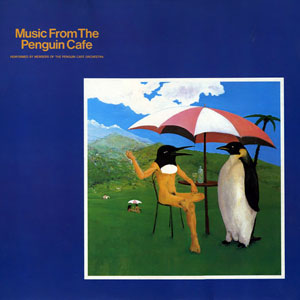
#132: Penguin Cafe Orchestra - Music from the Penguin Cafe (1976)


Zack: Listening to this album brought back horrible repressed memories from every time I've ever been put on hold ever in my life. Right there, I've probably successfully conveyed an exact description of the sound and feel to their music. And yet, I will continue to digress. We've talked plenty of times about music that seems to be designed for ambiance. That may mean a metal album that should be played whenever you're doing something intense and preferably violent or technoey stuff whenever you're flying through a virtual world or hacking or whatever it is you techie kids are doing nowadays. Music From the Penguin Cafe is, at its heart, an ambient album. It accepts that. It never tries to hide under a facade. And while its somewhat admirable that it embraces its identity, that doesn't mean it should be celebrated for anything other than mediocrity. It was adequate ambiance at best, at least compared to my all-time favorite ambient album, Moon Safari by Air. Although, the cover is pretty spiffy. It just kind of cruises along under the same pseudo folk-jazz appeal while the listener is forced to occasionally remember that there is music on. Finally, does anyone else find it weird that I've come so far as to be able to recognize the differences between good, middling, and bad ambiance? Because it's definitely weirding me out.
Favorite Tracks: The Sound of Someone You Love Going Away and It Doesn't Matter; Zopf; Chartered Flight

Emily: Just 2 albums after our last Brian Eno album, we come to yet another. Eno didn't play on the album himself, but he was the executive producer and released it on his experimental record label, Obscure. Now I know the label name has nothing to do with the content of the albums it releases, but obscure just sounds like a good way to describe Music from the Penguin Cafe. It's experimental ambient jazz folk, a mouthful of genres that blend together into 45 minutes and five instrumental songs. Nothing really stands out, but the music blended pleasantly into the background of our Saturday evening at home. Will I visit the Penguin Cafe again? Probably not, but it was a nice visit.
Favorite Tracks: Zopf; The Sound of Someone You Love Going Away and It Doesn't Matter; Chartered Flight

Wednesday, August 24, 2011

#130: Brian Eno - Here Come the Warm Jets (1974)


Zack: Brian Eno is the invisible hand behind a huge portion of this list. Not only does he have five albums by himself, but he also played in all three of the Roxy Music albums on the list and has produced for U2, Coldplay, Devo, Paul Simon, David Bowie, the Talking Heads, and countless other list-worthy musicians. I can’t even tell you how many times I’ve clicked on to Wikipedia for one of these albums and seen Producer: Brian Eno. He’s just all over the place. So, first off, thank you Mr. Eno for making so much of the music I’ve enjoyed over these past months possible. Here Come the Warm Jets had a weird Bowie-before-Bowie feel to it. Like Brian Eno is the Oscar Robertson to David Bowie’s Michael Jordan. Now some of you may be pointing out that Bowie was around before 1974, and you’re right. But while Here Come the Warm Jets may technically be after Bowie’s debut time-wise, it just sounds like a predecessor. Maybe that means that Eno is the Kobe to Bowie’s Jordan then. For those of you still following me after the basketball references, let me explain by saying that I can’t explain any of that at all. It isn’t necessarily similar sounding to any of the Bowie I’ve listened to (although when you consider all of Bowie’s reinventions there is probably something out there that sounds exactly like this), but it just has the same sort of artistically experimental vibe going on. He primarily uses a guitar-bass-drum-keyboard set-up but then extenuates it with horns and organs and just about everything else. He masterly manipulates distortion effects in a way that both sounds cool and doesn’t make you want to cover your ears and curse the cruel God that must be punishing you. That’s a rarer feat than you might know. It’s not a super fantastic album or anything but it’s definitely a cool listen that is easy to appreciate, but hard to worship.
Favorite Tracks: Here Come the Warm Jets; The Paw Paw Negro Blowtorch; Dead Finks Don't Talk

Emily: As we progress through the list, a few names keep recurring over and over again. These people - musicians, writers, producers - are the masterminds behind modern music. They're the ones who are constantly innovating and doing new things, progressing their sound and the sound of the era. One of those people is Brian Eno. We encountered Eno not so long ago with U2's The Joshua Tree, a little while back with Roxy Music and David Bowie, and months ago with Talking Heads. That's a lot of era jumping, and he's there for all of it. Now, we jump back to the Roxy Music era with Eno's solo work. Here Come the Warm Jets begins to bridge the gap between the glam of Roxy Music and the more experimental work of his later years. This album is kind of weird and arty, but is still enjoyable to listen to. I can see it being great music for a hipster/art school party - it is definitely rock music, but with layers of experimentation and distortion that are impossible to ignore.
Favorite Tracks: Baby's On Fire; Needles in the Camel's Eye; Here Come the Warm Jets

Thursday, August 4, 2011

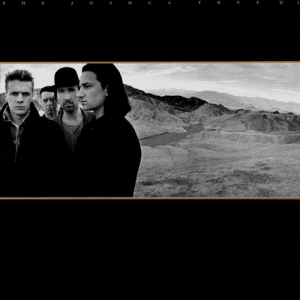
#119: U2 - The Joshua Tree (1987)


Emily: U2 is a very polarizing band to music fans. They definitely have their impassioned fan base, the people who pack the stadiums tour after tour, who buy every remastered/live/rare/never-before-heard album, and who ponder and debate the deeper meaning behind Bono’s lyrics. On the other hand, their detractors are just as vocal, saying that they’re overblown, over-the-top, and just too self-righteous for their own good. Now, I tend to fall in the second camp most of the time. After listening to The Joshua Tree, however, I can at least appreciate the other side. This is an important album for U2, and the production shows that. It’s grandiose in its musicianship, yet intricate. The Edge’s masterful guitar playing was the best part of the album, at least for me. The lyrical content is sweeping and attempts universality, though I thought that made some songs more impersonal and distant. However, this music is made for arenas and stadiums. Though I won’t be going out and buying U2 tickets anytime soon, I must commend them for knowing how to play to a massive audience. It’s a feat that few musicians can accomplish, and U2 has set the bar high for any band attempting to do it today.
Favorite Tracks: With or Without You; I Still Haven’t Found What I’m Looking For; Exit

Zack: If you were to ask someone who the biggest band in the world is, you would likely get a wide variety of results. There would certainly be some Radiohead supporters; maybe some Dave Matthew bros. Some may even offer up Red Hot Chili Peppers, depending on if they remember that they used to release albums from time to time. But I would be willing to bet that any music fan worth his or her salt will tab U2 as the biggest. How did they get into such a position? Well my guess is that they simply acted like they were the biggest band in the world until everyone else just decided to go along with it. Which I guess sort of makes Bono a glorified Flavor Flav. They take themselves ultra-seriously and add plenty of bombast and theatrics to their music until everyone just assumes that they are the best out there. It’s one hell of a winning strategy. Nobody has really been able to duplicate it, with the possible exception of Coldplay. Modesty is for chumps, so why even bother? But behind all of that lies the music, and you can’t hide under false bravados if your music is terrible. Surely, U2 must make some pretty life changing stuff to get four albums. Well, actually, no. It’s decent, but surely no better than that under any stretch of the imagination. I think that The Joshua Tree’s legacy and sales all are held afloat by that mask that U2 puts on every morning when they wake up. Pretend like you’re the best and ultimately everyone will think that you’re the best. It may sound kind of shitty, but then again it’s hard to argue with results.
Favorite Tracks: I Still Haven’t Found What I’m Looking For; Bullet the Blue Sky; One Tree Hill

Saturday, July 2, 2011

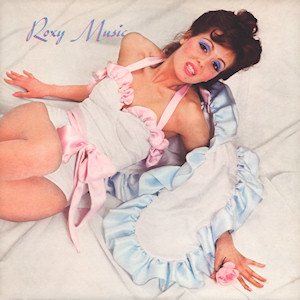
#105: Roxy Music - Roxy Music (1972)


Zack: I knew two things about this album going. One: I knew that Brian Eno was the featured synthesizerer. Two: I knew that Brian Eno would later go on to be one of the pioneers and most influential artists of the New Wave/electronic/techno hybrid known as ambient, or music that is specifically designed to fade into the background. With those two things in mind, I thought it safe to assume that Roxy Music would also fade into the background and enhance my Solitaire experience. Well, I regret to inform you readers out there that, for once, I…. gulp…. was………. wrong. Every song reaches out and grabs you. And then it won’t let go. No matter how much you cry and beg for mercy. I was so distracted by its awesomess that I completely forgot about my game of Solitaire. But in the end, I would have to say that it was totally worth it.
Favorite Tracks: Ladytron; 2HB; The Bob (Medley)

Emily: When I think of ‘70s music, alternative certainly isn’t the first thing that comes to mind. But that’s what Roxy Music was doing in 1972. Their self-titled debut begins to bridge the gap between the experimental art rock of the late ‘60s and the glam and punk sounds that came along in the late ‘70s. Drawing from these genres and postmodern pop culture, Roxy Music is an innovative and creative album from an equally innovative and creative band. 
Favorite Tracks: Sea Breezes; Re-Make/Re-Model; If There Is Something

Wednesday, April 13, 2011

#87: Talking Heads - Fear of Music (1979)


Zack: I vaguely remember writing that I thought '80s hipsters sat around and talked about how awesome Joy Division was. I was wrong. '80s (or late '70s if you're going to nitpick me) hipsters probably LOVED Talking Heads. Because I wasn't exactly sure what to write, I turned, as most lazy people with questions do, to Wikipedia. There, in the lyrics section, I discovered... "'Paper' compares a love affair with a simple piece of paper;" "in 'Life During Wartime,' Byrne cast himself an 'unheroic urban guerilla,' who renounced parties, survived on basic supplies like peanut butter, and heard rumours about weapons shipments and impromptu graveyards;" and, my personal favorite, "'Air' is a protest song against the atmosphere, an idea Byrne does not consider 'a joke.'" The fact that the theme of your song is so ridiculous that you need to clarify that you're serious should probably be a warning sign. One with big flashing lights. Now I'm not saying that artists should stick to normal, boring themes. And I'm definitely not saying this album was bad. In fact, I thought it was very cool and fascinating and thoroughly enjoyed it. But the fact that they seem to be taking themselves soooo seriously (at least as far as I can determine from Wikipedia, the most reliable of sources when trying to decode inflection) when their topics of choice are so over-the-top is slightly annoying.
Favorite Tracks: Cities; Heaven; Papers

Emily: According to Wikipedia, Fear of Music is supposedly rather deep and profound. Either that, or pretentious. I'm not quite sure, because I didn't get that vibe at all. As I've said before, I usually don't pick up much on lyrics the first time I listen to an album. This album was no different. What I got out of it was a fun, New-Wavey brand of post-punk that seamlessly transitioned between slower, melancholy tracks and upbeat, bouncier songs. Perhaps I need another listen to get that deeper message. Even if it's not there, this album is very good based solely on its musical merit.
Favorite Tracks: I Zimbra; Life During Wartime; Cities