Showing posts with label bob dylan. Show all posts

Friday, November 25, 2016

#408: Bob Dylan - Blood on the Tracks (1975)


Zack: Evaluating Dylan albums after only one listen is really tough. So much of the appeal is wrapped up in the cryptic lyrics, and so they usually require dozens of listens to really start to appreciate. This was true of Blood on the Tracks, just as it has been true for Highway 61 Revisited and Blonde on Blonde before it. Also just like the other two Dylan albums we’ve listened to, it is so musically compelling that it really invites those listens. As of right now, I could easily see Blood on the Tracks being a contender for my favorite album whenever we get around to our next awards batch. Hopefully by then I’ll have listened to it enough to have developed a fuller opinion.
Favorite Tracks: You’re a Big Girl Now; Meet Me in the Morning; Idiot Wind

Emily: My first error in listening to this album was attempting to read and do work at the same time. I wanted to catch up on email and work on some job applications, and some background music seemed like a great idea. I probably should've stuck with the radio, though. Bob Dylan demands greater attention than I provided to Blood on the Tracks. His mastery is not in the music itself (though it's compelling in its own way), but in the lyrics. And I'm just not one to pick up on lyrics while I'm reading and writing and doing other things. Blood on the Tracks seems to deserve multiple close listenings, and if I get around to it again I'll give it the proper attention.
Favorite Tracks: Meet Me in the Morning; Tangled Up in Blue; Lily, Rosemary, and the Jack of Hearts

Wednesday, July 30, 2014

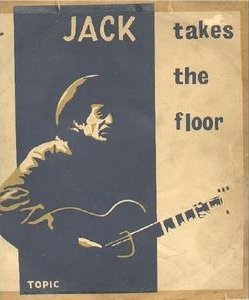
#295: Ramblin' Jack Elliott - Jack Takes the Floor (1958)


Emily: Ramblin' Jack Elliott is an early folk singer in the vein of Bob Dylan, with country undertones that also reminded me of Johnny Cash. Jack Takes the Floor is a bit like At Folsom Prison, due to the spoken introductions to a few of the songs and the live sound culled from performances rather than studios. However, Ramblin' Jack doesn't have the songwriting prowess of either Cash or Dylan. He mainly reinterprets traditional folk songs or presents somewhat humorous observations of everyday life. I didn't find this approach too interesting, but it definitely helped lay the groundwork for the masterful songwriting that later came from the genre.
Favorite Tracks: Cocaine; Salty Dog; Dink's Song

Zack: Ramblin’ Jack Elliott apparently had the same mentor as Bob Dylan – Woody Guthrie, whose works we crossed on Mermaid Avenue – but he’s definitely more of a pure folk artist. Wikipedia describes him as an “interpretive troubadour” compared to Dylan’s independent songwriting, and that description is dead on. Jack Takes the Floor features two covers of even older songs and two renditions of traditional folk songs to go along with seven original songs that all sound like they could have been passed down for decades anyway. Jack Takes the Floor is the type of album that listeners of classic folk or country would enjoy and anyone interested in the history of American music must check out.
Favorite Tracks: Salty Dog; New York Town; Cocaine

Monday, July 29, 2013

#238: Bob Dylan - Blonde on Blonde (1966)


Emily: On an album like Blonde on Blonde, you can't help but be blown away by Bob Dylan's songwriting. The instrumentation is simple, just an acoustic guitar and harmonica solos. While sometimes the harmonica was a bit screechy for my taste, the overall subtlety and simplicity allow the lyrics to shine through. Dylan is a storyteller through and through, and here we get elegantly painted stories inspired by and with a backdrop of the blues. Rather than exploring social messages and issues, Dylan takes us through the stories of individuals, of cities, of love, of loss - beautiful stories of humanity. I guess I can't count myself in the anti-Dylan cohort anymore, because I know I'll return to Blonde on Blonde again and again.
Favorite Tracks: Visions of Johanna; Stuck Inside of Mobile with the Memphis Blues Again; One of Us Must Know (Sooner or Later)

Zack: I meant to relisten to Highway 61 Revisited before listening to this because I know that both take place in Dylan’s random electric phase and I wanted to compare them.  But then I decided just to listen to it with my brother instead because, hey, screw it. I’m kind of glad I did because it allowed me to appreciate Blonde on Blonde by itself in a vacuum of harmonica solos and screechy vocals. And damn, it was great. It was a double album, but it never seemed to get old or lag or anything. Every song felt fresh and unique from all the others. From reading Wikipedia’s helpful breakdown of each individual song (really useful on Dylan albums because it can give you a snapshot of what he’s talking about – not exactly easy when really compelling instrumentation meets classic Dylan crytpiticism,) I learned that this variation was caused mostly from different blues influences. Some were Memphis blues, some were Delta blues (hell yeah, Lightnin’ Hopkins!), some were Chicago blues, and so on. All of it was fantastic. Now that I’ve finished, I think I’d like to go back and listen to both Highway 61 and Blonde on Blonde back-to-back to get an idea of which I like better. But both definitely stand apart as really great albums.
Favorite Tracks: Leopard-Skin Pill-Box Hat; Pledging My Time; Stuck Inside of Mobile with the Memphis Blues Again 

Wednesday, September 26, 2012

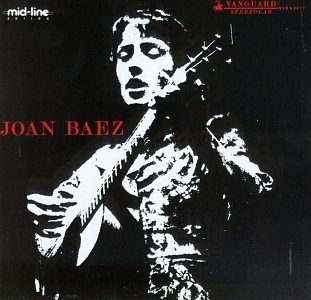
#188: Joan Baez - Joan Baez (1960)


Emily: Joan Baez is one of the founding mothers of modern folk, if not the founding mother. She was one of the first, way back in the early '60s when a lot of artists were just getting into rock and roll and British mod, she was delivering stripped-down renditions of traditional folk songs. This album is a preview of the protesting, outspoken, Bob-Dylan-girlfriend Baez of the late '60s. Each song is a traditional ballad, but she makes it her own by rearranging the music to only focus on an acoustic guitar and her pure, clear voice. The spiritual undertones of many of the songs reminded me of synagogue music of my childhood. The cantor played an acoustic guitar while singing simple songs about the holidays, Torah stories, or Moses - none too different than Baez's rendition of Little Moses. Donna Donna is a Yiddish folk song too, which is probably why this connection became so clear to me. I think 1960 Baez would make a great cantor in this sense. I can easily imagine choruses of children singing backup while she plays the guitar and expresses the universal ideals of these traditional songs. I'm sure the more badass Baez of later years would disagree with this image, but the beautiful simplicity of this debut conjures it for me.
Favorite Tracks: House of the Rising Sun; Donna Donna; Mary Hamilton

Zack: How does one go about outfolking folk music? Why, by taking standard folk tunes and reworking them so they sound like your brand of stripped-down, sincere folk music. Folk! Joan Baez on Joan Baez takes a bunch of songs, some of which will undoubtedly sound familiar, and transforms them so they are clearly Baez-esque ballads. Baez! I’m sorry, but when I don’t have anything funny to say I often just resort to saying the same words over and over again until they themselves sound funny. Folk. Folk. Folk. Baez. Baez. Baez. See it yet? I have nothing funny to say about this album because it is a rather beautifully honest display of songs that are specifically picked so they will sound vaguely familiar, while also being different enough because of the way in which they are played. Take, for instance, House of the Rising Sun. You’ve probably heard it somewhere, maybe by The Animals (full disclosure: I didn’t actually remember the name of the band who played that version and had to look it up) or Muse or the first part to Green Day and U2’s version of the Saints Are Coming. Point is, you’ve heard it somewhere, but not the way Baez does it. Quite a few songs are like that. Admittedly, I hadn’t heard quite a few of them before, but by the end of the album, they all felt very familiar.
Favorite Tracks: House of the Rising Sun; Mary Hamilton; Silver Dagger

Sunday, March 6, 2011

#75: Bob Dylan - Highway 61 Revisted (1965)

Zack: Maybe the (currently) old man could never sing, but he’s always been able to write one hell of a song. Highway 61 has nine fantastic examples of that song-writing prowess in action. Every track is beautiful in its own way. And that’s despite the Kermit the Frog vocals. The writers of the list recognized Dylan’s influence on modern music by giving seven of his albums the thumbs up. Now that I think about it, with six more Dylan albums coming up, I kind of wish I hadn’t already dropped that Kermit line. But that’s beside the point. Highway 61 Revisited is a classic example of Dylan at his best. Every song is folksy and well-constructed. And, no matter what, Dylan proves that he can dominate a harmonica like no one else. He is a music icon that nobody else can rival.
Favorite Tracks: Like a Rolling Stone; Highway 61 Revisited; Ballad of a Thin Man

Emily: This list keeps changing my preconceptions about music. First, it vaguely makes me a rap fan. Now, it has made me not hate Bob Dylan as much as I once did. I still think he can't sing to save his life, but Dylan is a legendary songwriter. His music is a reflection of a time of tremendous turmoil and change. The lyrics are powerful protests, coupled with a simple folk sound that really lets the message shine through. For that alone this album is a classic, and has certainly made Dylan a musical legend. Even if I can sing better than him.
Favorite Tracks: Tombstone Blues; Desolation Row; Like a Rolling Stone