Monday, May 30, 2016

#395: Joni Mitchell - The Hissing of Summer Lawns (1975)


Zack: This is the second of four Joni Mitchell albums on the list. When we started this project, I had no idea who Joni Mitchell was, and so I was skeptical that that was an appropriate number. But then I heard Blue, and album that I listen to maybe once a year and think “Wow, this album is perfect. Why don’t I listen to this more than once a year?” Despite the fact that I’ve only listened to Blue like 3 times, how incredible it is had me pretty excited for The Hissing of Summer Lawns. But the two albums are completely different. Whereas Blue is a pretty straightforward folk album, The Hissing of Summer Lawns draws on a more eclectic mix of genres. There’s a fair mix of jazz here, and it gets a lot more rockish on songs like In France They Kiss on Main Street. The last track, Shadows and Light, even gets a bit experimental by drawing on some looping and electronic-y music. I didn’t like that song, but still. What remains constant is the thoughtful lyrics. I didn’t pick up on a lot of this while I listened to the album, but in reading the lyrics now I can see what intricate stories Mitchell is trying to craft. Between the two, I definitely think Blue is the superior album. But The Hissing of Summer Lawns certainly has its moments, and the way Mitchell pushes the boundaries of folk can be are pretty interesting.
Favorite Tracks: The Hissing of Summer Lawns; In France They Kiss on Main Street; Edith and the Kingpin

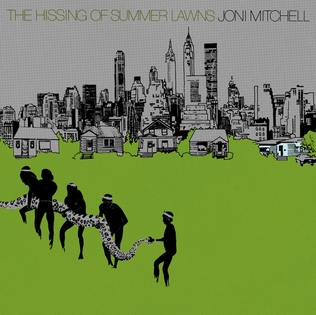
Emily: Looking back at where we wrote about Joni Mitchell before, my search brought me to our 200-album award post. I had nominated Blue, our first foray into Joni Mitchell's catalog, for an album that I wanted to return to later on. Since then, I don't think I've actually relistened to it. Perhaps I've heard a song here or there as it popped up on a playlist, but I haven't sat down and played the whole thing since then. Now, after listening to The Hissing of Summer Lawns, it appears I have double the Joni Mitchell albums to return to in the future. For one, I love the title of the album. It evokes such a strong and beautiful image of a quiet street, lined with trees and houses, on a breezy, sunny summer day. And the title fits the tone of the album beautifully as well. It's another intimate take on folk, balanced out with jazz, rock, and a touch of experimentation. As Zack noted, the lyrics deserve a deeper listen to fully understand the scope of the story. I intend to learn more about that story, alongside Mitchell's stories on Blue, when I return to them again.
Favorite Tracks: Harry's House/Centerpiece; In France They Kiss on Main Street; The Boho Dance

Friday, May 27, 2016

#394: The Avalanches - Since I Left You (2000)


Zack: Of the four albums I listened to while working on my prospectus, this one suffered the most form my diminished attention. It faded into the background a bit too easily, unlike Tarkus, and wasn’t compelling enough to get me to go back and relisten, unlike Marcus Garvey. That said, I’m not super sure I would have liked it even if I had been enraptured. I’ve come around a lot on electronic music, but I’m pretty particular. The Avalanches key sound is plunderphonics, which is a made-up word that means sampling a lot. Apparently, Since I Left You has somewhere in the ballpark of 3500 different samples in it, which is a thing that sounds wrong but I can’t refute. This type of music is something I have historically disliked (I can’t emphasize my dislike for Girl Talk enough), but at least when you have that many samples it’s impossible to know who precisely you’re just straight up stealing from so it actually is sort of your own work. Still, it just didn’t have the smoothness of Air or the soulfulness of Daft Punk, so I can’t imagine it would have grabbed me even if I was locked in.
Favorite Tracks: Etoh; Close to You; Live at Dominoes

Emily: Wikipedia decided to call Since I Left You a "plunderphonics" album. That doesn't seem like a real word, and it appears to be essentially the same thing as a mashup. The only difference between this type of album and, say, Girl Talk or The Grey Album appears to be that the insane number of samples draws from less-well-known sources rather than Top 40 pop, rock, or hip-hop. I still consider it a mashup, though, mostly because I really don't want to give the term plunderphonics any credence. Either way, anytime I listen to a mashup now I think about the copyright implications (what can I say, I'm almost a lawyer). Music and copyright is a hot topic right now, with the Blurred Lines/Marvin Gaye case saying that a song with a similar "vibe" to a copyrighted song is infringing, as well as continued controversy over what constitutes the fair use of a sample as a beat or in a mashup and whether the sampled artists should provide compulsory licensing. My guess is that here The Avalanches paid nothing for the samples they used, and it doesn't appear that they got in any trouble for it - regardless of the similarity between the original compositions and the final product. They created something original and new, but only by standing on the shoulders of others. This means of creativity has been embraced by musicians for decades and across genres, but the law hasn't really caught up yet. While I doubt that The Avalanches will get caught up in this evolution, as this album is already over 15 years old, it'll be interesting to see how artists and musicians - both the samplers and the sampled - adapt to a possible new legal regime that overlaps with artistic expression.
Favorite Tracks: Frontier Psychiatrist; Since I Left You; A Different Feeling

Friday, May 6, 2016

#393: Def Leppard - Pyromania (1983)


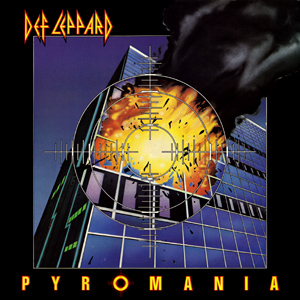
Zack: Tragically, Prince passed away earlier this week (at least the one in which I’m writing this). And as I thought about what an important figure he was and how much incredible music he made, I also couldn’t help but think about how weird it is that he existed in the same decade that gave us music like Def Leppard. As I was thinking that, I didn’t have Def Leppard specifically in mind, but they’re a handy stand-in for right now. Pyromania is not a good album. It is a pretty shitty album. Honestly, I don’t really know what is supposed to be redeemable about it. I tried to like Photograph, the biggest single off the album, and I guess it’s my favorite track? Notice that question mark. It is very important, because I want you to picture me, all handsome and whatnot, shrugging because I am very uncertain about what my favorite track is supposed to be off an album that is just not very good. Now, picture me shrugging even harder when I see that this album somehow went Diamond. Not Gold. Not Platinum. Platinum times 10. Diamond. How? How! I don’t know. This album came out in the year between Prince releasing 1999 and Prince releasing Purple Rain. Both of those albums sold very well too (Purple Rain went Diamond with an extra 3 Platinums to spare), but how could people be content to buy Pyromania when there were Prince albums right there to buy for the 3rd or 4th time. Doesn’t make any sense. The 1980s, you’ve still got some explaining to do.
Favorite Tracks: Photograph; Billy’s Got a Gun; Comin’ Under Fire

Emily: As Zack said, the '80s were a weird time for music. There were amazingly talented superstars whose music transcends the decade - people like Prince, Michael Jackson, and Madonna come to mind. There was a whole bunch of experimental post-punk and early alternative stuff, which isn't always my favorite, but it's at least interesting and created the foundation for great bands in the following years. And then there's a ton of schlocky hair metal that was insanely profitable and successful for a good 10 years, but 100% does not stand the test of time. Def Leppard falls into that latter category, and Pyromania exemplifies the crass, commercial nature of the genre. The album is radio friendly for sure, but it's a lot of flash with not a lot of substance. I understand why it did well in 1983, but it also just should've stayed there.
Favorite Tracks: Photograph; Rock of Ages; Too Late for Love

Thursday, April 28, 2016

#392: Burning Spear - Marcus Garvey (1975)


Zack: Let me get this out of the way right now: I listened to albums 391-394 back-to-back-to-back-to-back while working on my prospectus, so the same disclaimer about not paying the most attention I gave for Tarkus applies here as well. That said, I liked Marcus Garvey enough to go back and relisten to all the songs I realized I had completely not paid attention to. Which means I basically ended up listening to this album 2.5 times by accident, and I have absolutely no qualms about that. Marcus Garvey is a reggae album and we haven’t had a chance to listen to one of them in a long, long time (I haven’t gone back and looked, but I think the last one was Peter Tosh’s Legalize it somewhere on the other side of 300). Marcus Garvey definitely had some political undertones to it which didn’t get through to me at all. All I noticed was the smooth grooves that kept telling me how nice it would be to be relaxing in a tropical paradise somewhere. And while I’m excited to double back to get more about the message, the feeling that the album had is pretty much all you can ask from a reggae album.
Favorite Tracks: Slavery Days; Tradition; Resting Place

Emily: Reggae music is deceptively simple - the steel drums and chill vibes evoke Jamaica's tropical climate, beautiful beaches, and laid-back party atmosphere. However, underneath these first impressions frequently lie revolutionary lyrics that reflect the political, economic, and social turmoil that took over the island after its independence and continues to some extent today. My favorite example of this is Jimmy Cliff's The Harder They Come (probably because I wrote a paper about the album and its accompanying film for a class in college), but Burning Spear's Marcus Garvey comes in a close second. The album cover itself indicates that it's not just a reggae party album, revealing the political and militant content right up front. A first listen reveals a classic upbeat reggae sound, right at home on the beach or in a dancehall. However, I need to listen to Marcus Garvey a few more times to fully grasp the entire context - something I definitely intend to do in the future.
Favorite Tracks: Marcus Garvey; Tradition; Old Marcus Garvey

#391: Emerson, Lake & Palmer - Tarkus (1971)


Emily: Emerson, Lake & Palmer sounds like it should be the name of a '70s soft rock band, the kind that wears Canadian tuxedos and big mustaches and plays exclusively on adult contemporary radio and in waiting rooms. But then I saw that their album had a robot armadillo on the cover, so I knew that I was in for something totally different. Tarkus (which is the name of the aforementioned armadillo, according to Wikipedia) starts out with a 20-minute prog rock jam session. The rest of the album consists of much short tracks that continue the prog sound, with jazz and classical influences and a couple tracks that wouldn't be out of place in a particularly proggy church. I still don't understand where the armadillo plays into all of this, but I'm glad the album defied my expectations.
Favorite Tracks: Tarkus; Bitches Crystal; A Time and a Place

Zack: Prog rock has been so hit or miss, so it was nice to find that this album struck a happy medium between weird and listenable. The weirdness, which mostly shone through on the 20-minute title track, isn’t an abrasive kind of strange, but more like things just sound a bit off, like the entire album is just slightly positioned off center somehow. It gives it a sort of kooky vibe that I actually quite enjoyed. Once you get past the first track, which I need to reiterate is more than 20 minutes long and more than half the album’s total length, all the songs sort of breeze right by. I was working on my prospectus throughout the album, so I wasn’t necessarily paying the most attention that I could have, but it seemed like an album well-deserving of its art, in its general nature of making you both slightly confused but sort of appreciative.
Favorite Tracks: Tarkus; Are You Ready Eddy; The Only Way (Hymn)

Tuesday, March 22, 2016

#390: Primal Scream - Vanishing Point (1997)


Emily: I'm always on the lookout for good music to listen to while I work. This is a hunt that will become even more pronounced as I spend my summer studying for the bar and starting my first real-life job as a judicial clerk. For me, the best working music is largely instrumental (though a few words here and there is fine), a mix of energetic and calming songs, and some sort of steady beat. I've found a few things that fit this bill - the John Coltrane Pandora station and the Mellow Beats playlist on Spotify are two of my favorites, as well as a few of the albums we've chronicled over the years. And now, Primal Scream fits the bill as well. The album is largely instrumental, spanning the '90s rock spectrum between alternative and electronic. It's an interesting mix, but it all flows together - perfect for both background music while studying and a closer listen on its own.
Favorite Tracks: If They Move, Kill 'Em; Kowalski; Star

Zack: I had never heard of Primal Scream, so I had no idea what to expect going in to this album. I had classified it as alternative rock, but alternative is such a broad category that it could really be a lot of different things. I was a bit nervous, but it turns out I had no reason to be. Primal Scream reminded me of a lot of different artists that we’ve come by, but the main three were Radiohead, TV on the Radio, and Air. You may notice that those are three very, very good comparisons, especially coming from me since I love TV on the Radio so so so very much. Vanishing Point mixed a light version of alternative rock with a heaping dose of electronic, specifically some effects that remind me of the modern chillwave movement. I actually find the sections where the band was playing around with electronic music to be the more interesting ones. But the whole album was really solid. I didn’t love it quite as much as I love The Bends or Moon Safari or pretty much anything by TV on the Radio (OK Calculator excluded), but it was the sort of album that I could easily see myself keeping on my iPod and just enjoying on a long train ride or something. Considering the bloated size of my iTunes and my limited iPod space, that’s one of the highest compliments I can give.
Favorite Tracks: Long Life; Get Duffy; If They Move, Kill ‘Em

Monday, March 21, 2016

#389: The Byrds - Sweetheart of the Rodeo (1968)


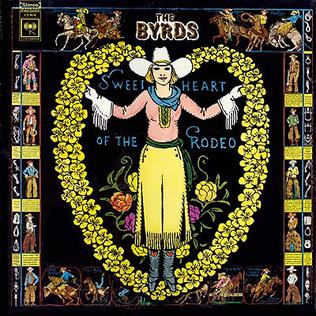
Zack: Now for part 2 of our accidental Gram Parsons extravaganza. Apparently, the Byrds popularity as a rock/psychedelic band was kind of winding down and members were leaving. In order to fill in some places for a tour, they brought in relative unknown Gram Parsons, who then proceeded to brainwash the rest of the band into making a country album. Essentially, Gram Parsons wanted to merge country and rock music into one single sound, and instead of making his own albums and hoping they catch on, he somehow took over a major rock band and changed them from the inside instead. Seriously, reading this story sounds like a cross between Ocean’s 11 and Charles Manson. But you can’t argue with the results. Much like Grievous Angel, Sweetheart of the Rodeo has a bit too much twangy honky tonk in it to be the particular brand of country that I enjoy. And it lacks the emotional depth that Parsons was able to put into his solo work. But it still sounds more innovative and less generic that the other Byrds album we listened to, so I count this as a decent win. Sweetheart of the Rodeo was breezy, rarely boring, and generally stood out as doing something sort of different. I didn’t particularly love this album, but I liked it enough that I don’t mind saying it’s something that more people should probably check out.
Favorite Tracks: You Don’t Miss Your Water; One Hundred Years from Now; Nothing Was Delivered

Emily: Zack has been on my case lately about not getting through albums quickly enough. While he makes a legitimate point, part of my reason for slowness is that I'm just not super excited by the current batch of albums. Alas, I have to get through the current batch before we get closer to #400 and beyond. So tonight, a slow Monday night at home, I decided to sit down with my oh-so-scintillating Federal Courts treatise and fire up The Byrds. While Sweetheart of the Rodeo made a chapter on legislative courts somewhat more interesting, it definitely wouldn't be my first choice of studying music. Or of other kinds of music. It was just too much honk and too much tonk throughout. Wikipedia told me that before they brought Gram Parsons in, the band wanted to do more of a concept album encompassing the American pop music of the 20th century. Now that sounds like an intriguing album, but when they brought Parsons in he essentially made them scrap the concept and go full-on country instead. The result was not too different from Parsons' solo effort, which we just listened to, but it seemed to have even more of a twangy country vibe - not exactly my cup of tea. But getting through Sweetheart of the Rodeo does make us one album closer to the next hundred-milestone and beyond, so it at least counts for that.
Favorite Tracks: One Hundred Years from Now; Nothing Was Delivered; You Ain't Going Nowhere