Saturday, June 23, 2012

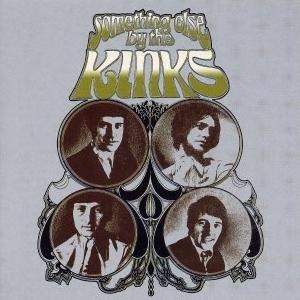
#157: The Kinks - Something Else by the Kinks (1967)

We would like to start by apologizing for the long pause since that intro post. Unfortunately, one of our guest bloggers has run into some technical difficulties in getting us his posts. This has caused a bit of a logjam effect, so we've decided to post what we have now and retroactively go back and add his once we have them. So, without further ado, The Kinks!


Emily: I’ll admit, I was a bit skeptical when Zack wanted to include The Kinks on this pantheon of classic rock. It’s not a name you hear very often compared with the epic likes of the Beatles, Stones, and Who, and I had very minimal exposure to the band beyond You Really Got Me and the other album we listened to by them. However, I trusted his musical judgment and agreed to add Something Else into this experiment of classic rock classification. Though I still don’t think the Kinks are quite as on par with the other three bands, I can see (rather, hear) the important influence they had. Some songs on the album have an ethereal, lilting, dreamy quality to them that doesn’t sound very rock but definitely sounds very ‘60s. Most of the second half of the album, however, is essentially proto-garage rock. It was a unique, almost revolutionary sound for the time and influenced one of the most large and important sub-genres of rock music. Now, that accomplishment is worthy of this musical pantheon.
Favorite Tracks: Afternoon Tea; Love Me Till the Sun Shines; Two Sisters

Matt Brune: The Kinks are the quintessential mod band of 1960s London. Though The Kinks would have limited success after the mid-60s, they would remain a fulltime band until 1996, longer than The Who, The Rolling Stones, and The Beatles. But, back to 1966: This album has some precious gems amongst it. No Kinks fan could possibly overlook that beauty that is Waterloo Sunset. It is hard for me to pick favorites, as there are no bad songs on this album. It had a brilliant balance of songs that were reminiscent of the initial phases of the British Invasion, as well as the psychedelic tunes that were brewing and would eventually run out the mods. Two Sisters, Situation Vacant, and Waterloo Sunset were, in my opinion, the best tracks, but that is subject to change next I listen to this album. Description: https://s-static.ak.facebook.com/images/blank.gif
Favorite Tracks: Waterloo Sunset; Two Sisters; Situation Vacant


Zack: From discussing my Mount Rushmore theory with other human beings, I have concluded that the most controversial of the four is easily the Kinks. It’s certainly understandable. As influential as the Kinks were/are, they’re being compared to the freaking Beatles, Rolling Stones, and Who. Obviously, part of the reason I included them is my previously discussed bias. If you’re too lazy to click the link, then I’ll just say that my dad is a HUGE Kinks/Ray Davies fan and I’ve been listening via osmosis for years. But even I have to admit that the Kinks sort of lack that clearly-identifiable trait that makes them stick out. The Beatles are pop-rock. The Stones are blues-rock. The Who are practically protopunk. The Kinks are…the most likely to write a song called Afternoon Tea? The most difficult to pigeonhole? All four of these bands change their sound to some degree as they progressed, but the Kinks make one of the bigger jumps. It’s easy to forget that they first burst onto the scene with the hard rock classic “You Really Got Me.” Years later, they were writing silly acoustic ditties about trannies. They, of course, had a psychedelic phase as well. If you had to give them a sub-sub-genre, I guess it would be pop-rock, but that seems to only cover about half their repertoire. After much thought, I’ve decided that their claim to fame is that they are the most conceptually sound. Not an easy task when you consider that they’re up against the band that made Tommy and the overall brilliance of the Beatles. But it’s definitely true. The Kinks simply do not make albums as songs; they make them as storybooks. While they definitely got better at it as time progressed, it’s just as true for Something Else, one of their earlier works. Maybe the subject material isn’t as united as you’d expect, but the tone of each song works to reflect a certain mood on the listener. Furthermore, they use the album as a palette to express their unique blend of hard rock, psychedelic, and pop brand. The execution on this technique is near flawless, making it a great example of the Kinks sound, both to someone whose dad has been pumping it into his brain from the time he was young and someone who has never checked them out before.
Favorite Tracks: Waterloo Sunset; Death of a Clown; Afternoon Tea

Saturday, May 26, 2012

The Re-returning


Whoopsie daisy. So I guess it’s been over four months since we last posted. Time sure does fly when you’re trying to cope with one monster of a semester. We usually suck around finals, but a whole semester is pretty unacceptable.

But since there’s nothing we can do about it, it’s time to just accept it and try and move on. So we’re going to try and really kick ass this summer to make up some ground. First up is the idea we left off on.

Zack: Ranking things is fun. There seems to be an innate human desire to make top-ten’s and other such lists. No one is guiltier of fetishizing this base human instinct than us. Alright, maybe fetishizing wasn’t the optimal word there, but you get the idea. Anyway, one of my favorite things to do is the “Mount Rushmore” approach. Basically, you assume that they’re going to be building a Mount Rushmore of something and you need to select the four people to be represented.

Here’s an example: NBA centers. For me, it’s Wilt, Kareem, Bill Russell, and Shaq. Notice how there isn’t an honorary mentions section. There can’t be. The Mount Rushmore model forces you to set a hard cap at four and you can’t break it. There has to be a very thick line drawn. I’m not allowed to say “well Moses, Duncan, and Olajuwon were all like PF/C so they have to be considered.” Nope. It’s just Wilt, Kareem, Russell, and Shaq.

This is actually even harder than you’d imagine. The Mount Rushmore model also carries with it a sense of immortality. You can’t pick two people who had very similar games/legacies/whatever because what if history judges one to be a lite version of the other. The four need to be at least minimally different so that, if someone gazing upon the majestic stone monument years down the road doesn’t agree with one of the choices, at least they can say, “but he was the most [insert adjective].”

Getting back to music, I like to apply the Mount Rushmore model to the great classic rock bands. My four is The Beatles, The Rolling Stones, The Who, and The Kinks. I can safely say that, having talked about this with quite a few people, I don’t think I’ve ever encountered a single person who agrees with me. But if they want to express their own opinions, they can go start their own blogs. So here’s what we’re going to do; we’re going to review an album by each band. And by “we,” I don’t mean just Emily and me. We’ve brought in two guest bloggers for this. Emily’s close childhood friend, Matt Brune, and my ex-coworker and friend (making an encore, no less), Matt Henry. All four of us will write reviews for each album, rank the four bands based on those albums, and write a synopsis of why/how they came to that decision. And who knows. If there’s a clear consensus, maybe I could be convinced to change my Mount Rushmore bands. Haha, just kidding.

Wednesday, January 11, 2012

#156: Tito Puente - Dance Mania (1958)


Emily: Even though most people probably have no idea who Tito Puente is, he’s pretty important in the realm of Latin music. Anyone who is dubbed both “El Rey de los Timbales” and “The King of Latin Music” clearly has done something to elevate him to the top of the genre. He was an accomplished band leader and musician who brought dozens of Latin jazz, mambo, and salsa albums to mainstream listeners, and Dance Mania was one of the first of those efforts. Each song combines those genres into high-energy, danceable music that made me wish I had taken more than one salsa lesson from high school Spanish Club. Although the tracks tended to be indistinguishable from each other, each one kept up the same enthusiastic Latin sound. This would work well as background music for a Mexican meal, or, better yet, the backup music for some margarita-fueled impromptu salsa dancing.
Favorite Tracks: Varsity Drag; 3-D Mambo; Mambo Gozon

Zack: You may remember a few weeks ago when I listened to Sinead O’Connor while making a beef stew. I thought that it was good cooking music, but I’ve come to the conclusion that it was really good stew cooking music. Something about cutting potatoes while listening to that fair Irish lass was just so perfect. So, what did I find myself cooking while listening to Tito Puente? Why, chili of course. I swear I didn’t intend that to happen. It was just the next album on the list and I’d been meaning to make a batch of chili for weeks but just got the ingredient I kept forgetting yesterday. Still, it is undeniable that it worked. I was salsa dancing over to cut onions and everything. This album would be a lot of fun regardless of coinciding activity, but cooking chili was just so appropriate. Now I just need to find something to listen to while making stir fry…
Favorite Tracks: Complicación; Cuando Te Vea; Varsity Drag

Monday, January 9, 2012

#155: Beck - Odelay (1996)


Zack: In the wise words of one Bender Bending Rodriguez, Beck is “a musician/poet who transcends genres even as he reinvents them.” You really can’t sum it up any better than that. For those of you who haven’t picked up on the multiple hints I’ve left so far throughout this blog, Futurama is a wonderful show and I especially recommend Bendin’ in the Wind as a particularly good episode. It evens provides a great breakdown of this album is particular:
Beck: “You know, when I'm upset, I write a song about it. Like when I wrote Devil's Haircut, I was feeling really... what's that song about?”
Bender: “Hey, yeah! I could write a song! With real words, not phony ones like 'odelay.'”
Beck: “'Odelay' is a word! Just look it up in the Becktionary!”
Zing! Odelay was a really fun album. I’d listened to a few other Beck works prior and was really disappointed that Guero, Modern Guilt, and Mellow Gold had all been left off. I can’t speak for Sea Change, but I’m totally okay with Odelay replacing those others. It really showcases Beck’s signature ability to avoid being pidgeonholed. Oh, you think I’m just some indie/folk artist? Boom! I just mixed a little hip-hop in. What’re you gonna do about it? My one critique would be that it didn’t finish strong. It leads off with a solid mixture of singles and just generally great tracks, but it really winds down with a few mehs at the end. I think a simple track reshuffling would have made it even better. Perhaps starting the same way but ending with Where it’s At, Readymade, High 5 (Rock the Catskills), Jack-Ass in that order? Other than that tiny little hiccup, though, Odelay was a modern masterpiece.
Favorite Tracks: Jack-Ass; Devil’s Haircut; Where it’s At

Emily: First of all, I have to say that I absolutely love the cover of this album. I want one of those dogs to run around my house being cute and mopping the floors as he goes. Anyway, Beck is an interesting artist. He’s never content to stick with one successful sound, instead eschewing the rules of popular music to constantly change and evolve his music. He’d rather gamble with something innovative and cool than sticking with a top-selling strategy from a previous train of thought. Odelay is probably the first of Beck’s albums to demonstrate this mentality. He was riding high off the success of the slacker anthem Loser, but instead of sticking with the drawling slackerdom of the hit single Beck added different influences and sounds to the follow-up to his fun wordplay and sometimes nonsensical lyrics. The result is a creative album that is truly alternative, drawing on a wide variety of genres (folk, grunge, jazz, and hip-hop, among others) but not sounding like any one in particular. In fact, it doesn’t necessarily even sound like Beck up to that point, but his near-constant reinvention is where the artistry lies.
Favorite Tracks: The New Pollution; Devils Haircut; Where It’s At 

Saturday, January 7, 2012

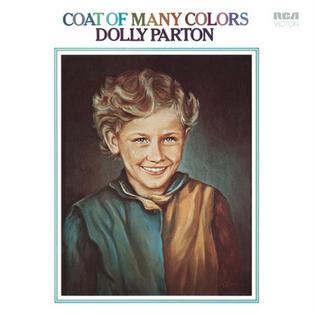
#154: Dolly Parton - Coat of Many Colors (1971)


Zack: There are a lot of albums that I’ve listened to that just seem to drag on forever. This is not one of them. Partly, that is because the songs are so simple, yet graciously performed by what can only be described as one of the most underappreciated musicians of the past 50 years that they just seem to fly by. It’s also partly because this album is less than 28 minutes long. I mean, hot damn! Why can’t some more of our albums been that short. I’m looking at, Captain Beefheart. Also that 99 song album that we’re going to have to listen to some point down the road which I am not looking forward to that at all. Coat of Many Colors gives you all those wacky subgenres of country in one shot. It’s got your country-pop, ballad country, country-rock, etc. Could have used a little bit more cowpunk but I’ll let it go this one time. When she drifts over more towards the country-rock or country-pop, I felt more engaged. That’s probably more due to personal preferences though. The signature and title track of this album doubles as both the opener and high-point. After doing a little bit or research, I determined that the three worst songs on the album just so happened to be the ones not written by Dolly as well. What I’m trying to say is that you suck, Porter Wagoner. Ultimately, the conclusion this album left me with is that there are some legitimately talented country musicians out there. They’re just all old and decrepit now. But if country music started to feature less ridiculous b2a (boot-to-ass) based songs and more of the Dolly Parton, Willie Nelson, and Johnny Cash kind of stuff I’ve been lucky enough to listen to up to this point, I may start to become a country music fan.
Favorite Tracks: Coat of Many Colors; Here I Am; Early Morning Breeze

Emily: Aside from twang and being generally disliked in major metropolitan areas, country music is known for its intensely personal songwriting. Oftentimes the stories tend to blend together into a lot of variations on “woe is me I can’t find love in this gosh darn town.” Dolly Parton’s Coat of Many Colors, however, breaks that mold. For non-country fans Dolly is best known for her over-the-top personality and shameless love of surgical enhancements, but she really is one hell of a storyteller. This album, which Parton wrote almost entirely on her own, tells her story of growing up poor with heartfelt honesty and emotion. While I wasn’t always a fan of the music behind the lyrics (as I expected), I was completely drawn in by the story.
Favorite Tracks: Traveling Man; Coat of Many Colors; Early Morning Breeze

#153: Bauhaus - Mask (1981)


Emily: One major criticism of this list is that it’s incredibly Brit-centric. Bands like Bauhaus had major (or minor) success in the UK but never really broke in with US audiences. For the Americans that are uninformed and unwilling to actually listen to everything on the list, this seems like a slight to many successful and influential American bands in favor of obscure British indie rock. Unfortunately, that opinion is rather narrow-minded. As we make our way through the list, Zack and I have encountered more than a few bands that we hadn’t heard of previously. It’s almost a benefit, because then we have no preconceived expectations for the music. Take Bauhaus, for example. I had no idea who they were before a few days ago – no idea about their history, their sound, their era. All I knew was that they were post-punk, and that can mean any number of things. Going in blindly, I was pleasantly surprised with what I heard. Bauhaus doesn’t really break any new sonic ground with Mask, but their rockin’ sound incorporates some space-age, futuristic elements that set the album apart from a fairly monotonous (so far) post-punk field. Bauhaus may not be my new favorite band, but listening to Mask was certainly an enjoyable way to spend 45 minutes.
Favorite Tracks: The Passion of Lovers; In Fear of Fear; Mask

Zack: I don’t think Bauhaus is post-punk as much as they are Prog punk. Hey look! I invented a new kind of music (or at least a term for it) by cleverly mashing together two pre-existing terms. I’m like a real music critic now! Anyway, they seemed to me to be a cross between the Dead Kennedys and Pink Floyd. Almost like they wanted to be a tribute band to both but didn’t like the way Dead Floyd or Pink Kennedys sounded. Which is funny, because I love both of those names. But that’s beside the point. I thought Mask was alright. I didn’t absolutely love it or anything. It did make my train ride how slightly more enjoyable, though. And it paired pretty well with Pokemon Gold, a surprisingly difficult thing to do. So, you know, there’s that. I probably will never go back to relisten to it, but at least I can say that my Totodile pwned some Caterpies while The Man With the X-Ray Eyes played in the background.
Favorite Tracks: Hollow Hills; Mask; Kick in the Eye

Thursday, January 5, 2012

#152: Nas - Illmatic (1994)


Zack: Ladies and gentlemen, meet the album that started it all. You see, after we found the list, we were thinking about working out way through it. I wouldn’t say it was set in stone that we’d actually do it, though, and we hadn’t planned any method of recording reactions. At the time, I was on a major Nas kick (I get into that zone every once in a while) and I was thinking about how amazing Illmatic is and how Emily wouldn’t be able to appreciate it. From there, I somehow got into the idea of starting a blog. Basically, I figured that if we were writing about it, she would be forced to really think about what she had heard. Since Nas is so crazy deep, I thought this would make her start to contemplate the music to the point that it would transcend “I don’t like hip-hop.” She agreed and here we are now. And, you’ll never guess this, but I kind of think she may like Illmatic. We’re not listening to it together and I’m a little ahead of her on our mini-list for break, so I don’t know what she’ll think. But my expectations are high. I’ve been really strategic in how I’ve selected hip-hop albums. In order, we’ve gone OutKast. Kanye, Fugees, Beastie Boys, Lupe Fiasco, Snoop Doggy Dogg (her idea, not mine), Common, Afrika Bambaataa and the Soul Sonic Force, Lauryn Hill, and A Tribe Called Quest. Basically, I’ve tried to focus within an intellectual sub-genre with catchy and smooth producing behind it. I’ve taken a few chances to push the envelope, especially more towards the old school stuff. I’ve also shown her stuff which blurs the lines between hip-hop and other genres, like funk and R&B. And so far, it’s worked pretty well. But now I’ve gone as far as I can go like that. Sure, I could hold off and listen to Jay-Z (a little edgier, but still right around the same land we’ve been inhabiting) or try Grandmaster Flash. But that would just be delaying the inevitable. The swimmies are coming off and she’s getting shoved into the deep end. She should be glad this is all I’m doing too. I’m pushing her off the ledge of the pool, but I could have kicked her from the high dive with something like Wu-Tang. This is manageable. He’s rapping with truly legendary skill that matches, if not exceeds, anything we’ve heard before. The only difference is that he’s rhyming about existing within all the “ghetto life” rather than how Lupe talks about overcoming it. Regardless, I’m anxious to hear/read what her thoughts were on one of my favorite hip-hop albums of all time. And to see if she was confused why Nas’s N.Y State of Mind didn’t have Alicia Keys.
Favorite Tracks: N.Y. State of Mind; One Love; Life’s a Bitch

Emily: Welcome to the next chapter of 1001 Reviews’ ongoing series, “Zack Strategically Picks Rap Albums from the List so Emily Can Come to Appreciate the Genre.” Okay, so maybe we need a catchier title, but that pretty much encapsulates one of our subsidiary goals for this blog and musical undertaking. For today’s edition, we come to Nas’ 1994 debut album, Illmatic, which Zack has deemed an integral next step in our foray through hip-hop and rap. It certainly piqued my curiosity about Nas and his approach to hip-hop. The production and beats are spare and minimalist, with a few jazz samples. This really allows the lyrics to become the focus of the album, chronicling Nas’ experience as an inner-city teenager in New York. Because the lyrics are so integral, I definitely think I need to re-listen to Illmatic to really understand its style and impact. There is still so much more I don’t know and don’t like about rap and hip-hop, but this stop on the journey is definitely pointing me in a more enlightened direction.
Favorite Tracks: The World is Yours; It Ain’t Hard to Tell; Memory Lane (Sittin’ in Da Park)