Tuesday, March 11, 2014

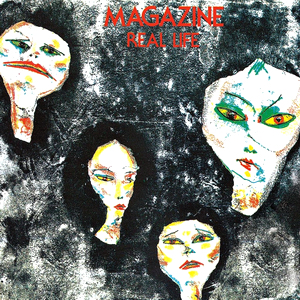
#273: Magazine - Real Life (1978)


Emily: Usually the magazines I read are Cosmo or something equally girly/trashy. Sadly, Magazine the band was not nearly as fun as magazine the publication. Since Real Life is a fairly early post-punk album, and the band was started by a guy from the Buzzcocks, it ended up being more punk than post. I liked that element, but overall I wasn't enthused. Post-punk has started to all sound the same to me, and it takes significant creativity to overcome the standard sounds of the era. Magazine started to do that, but didn't take it far enough. The end result, although not bad, was simply underwhelming.
Favorite Tracks: Shot by Both Sides; Recoil; The Light Pours Out of Me

Zack: I took a break from the deep Wu-Tang dive I’ve been on lately to listen to this album. I’d initially listened to it like a week prior but wasn’t really paying attention. I think I was playing around with ANES data at the time or something, and you know how interesting that can get. Anyway, Real Life did not sound like any Wu-Tang I’ve listened to, so I’m going to have to hold that against it. Then again, this did come out 25 years before Enter the Wu-Tang, and that album sounds like nothing else before it, so I can’t really be that harsh on that grading metric. Real Life was a pretty decent album. It didn’t sound quite as boring as a lot of the other post-albums we’ve come across, which I attribute at least a little to the fact that one of the founding members was literally in the post-punk phase of his career after leaving Buzzcocks. A few songs stuck out – those would be the ones listed below – but a lot of the songs just sounded mildly interesting and didn’t really draw me away from the GSS or Pew data I was playing with (welcome to my life). If I had to sum up this album in six words, I would go with: “Good, but didn’t bring da ruckus.”
Favorite Tracks: The Light Pours out of Me; Recoil; Motorcade

Saturday, March 8, 2014

#272: Frankie Goes to Hollywood - Welcome to the Pleasuredome (1984)


Zack: I was listening to this album while outlining. When I got to the third song, I fell into a deep trance and felt a sudden, insatiable urge to commit some sort of high-profile political assassination. Next thing I knew, I was almost done with my outline and I was listening to a cover of Born to Run that I didn’t know existed nor want. Not to say that this album wasn’t good, but don’t cover the Boss like that. You are not Bruce. You are Frankie. And you may be on your way to Hollywood, but Bruce is from Jersey, and we handle our business a little different in the Garden State. Actually, the cover wasn’t half bad. Neither was this album, which was much lower on the cheese quotient than the most well-known track would have you believe. It wasn’t a particular great album either, but considering some of the other New Wave we’ve come across, I’ll take okay any day.

Favorite Tracks: Relax; Black Night White Light; Snatch of Fury (Stay)/Welcome to the Pleasuredome

Emily: At some point in the early '80s, people were really into Frankie Goes to Hollywood. Now, they only had one hit in the US (and a few more in the UK), but that one hit inspired legions of fans wearing colorblock T-shirts telling the world that "FRANKIE SAYS RELAX." These T-shirts were most appropriately worn with leg warmers and crimped hair, of course, and I doubt many of their wearers were actually die-hard Frankie Goes to Hollywood fans, since it's pretty hard to be a die hard fan of a band with one album and one song that broke up shortly after both were released. But I'm sure Frankie has some fans out there who still love this album. And they probably still love their leg warmers too, since Welcome to the Pleasuredome is completely stuck in the '80s. It's a middling New Wave album with some schlocky ballads, a few neon-hued dance tracks, and a surprisingly good cover of Born to Run. Must like their eponymous T-shirts, Frankie Goes to Hollywood hasn't exactly aged well, but their music isn't a bad a blast from the past.
Favorite Tracks: Relax; Wish the Lads Were Here; Born to Run

Sunday, February 16, 2014

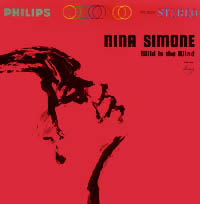
#271: Nina Simone - Wild is the Wind (1966)


Zack: I could talk about the epic title track here, but I won’t. Instead, I’m going to focus in on Lilac Wine, a song we saw a couple hundred albums ago on Grace by Jeff Buckley that I had, at the time, no idea was a cover. I’ve listened to Grace roughly a billion times since then and Lilac Wine remains a song that I sort of like. It’s part of a three-track break between the powerful intro of Mojo Pin and Grace and the mid-album tear-makers of Hallelujah and Lover, You Should’ve Come Over that lulls you into just the right headspace. On Grace, it’s more a placeholder than a powerful, album-defining song. Not here. Not for Nina Simone. Lilac Wine was the first song that made my brain draw parallels to Jeff Buckley. But once I had finally made the connection, I just couldn’t stop hearing it. Honestly, I’m kind of disappointed it took me so long. They have almost identical singing voices (gender be damned!) and the music is almost identical in composition. I’ll admit to liking Grace more. But it was still cool to hear where that all came from and it was fantastic hearing someone perform Lilac Wine in such a way that was so similar, and yet so different, from the way I had initially heard it.
Favorite Tracks: Lilac Wine; Wild is the Wind; If I Should Lose You

Emily: What's crazy to me about this album is that it's made up of leftover songs from previous recording sessions. If these are the leftovers, the choice cuts must be absolutely amazing. Wild is the Wind is excellent exhibition of Nina Simone's talents. Her voice combines the musicality of jazz with the heart-wrenching emotion of soul and blues, creating music that pulls in both the listener's mind and heart. Some of the tracks have an upbeat Motown feel as well, adding in another element to reflect the music of the times but which didn't really fit in with the rest of the album. Where the album really shines is on the ballads. With a little bit of music and a lot of Simone's voice, these songs will fill a room with emotion and soul.
Favorite Tracks: Four Women; Either Way I Lose; I Love Your Lovin' Ways

Thursday, February 6, 2014

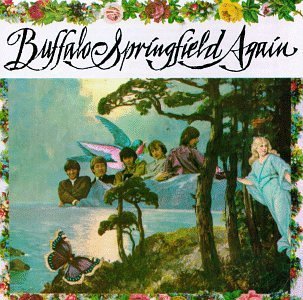
#270: Buffalo Springfield - Buffalo Springfield Again (1967)


Zack: Guess what guys! We found a way to shoehorn more Neil Young in without waiting another 400 albums! Buffalo Springfield was the band that launched the careers of Stephen Stills and, much more importantly, Neil Young. Buffalo Springfield Again is their second and penultimate album. And that should catch you up on all the basic facts. Young wrote three of the 10 tracks, but surprisingly only one of them appears below in my favorite tracks. Why is that? Because he decided to run off and produce two “orchestral experiments” with one of Phil Spector’s lackeys (Wikipedia describes him as an associate, so I don’t know if he assisted in producing music or just held Phil’s guns when not in use…..too soon?). While I found both Expecting to Fly and Broken Arrow to be interesting and good songs in their own right, they pretty clearly stood out like a sore thumb when put in the context of an album of psychedelic folk rock. No, the four songs written by Stills are clearly the backbone of this album, and it would be disingenuous of me not to give him credit for shaping what this album is. Buffalo Springfield Again is a solid, breezy folk album from the 60s. If you like folk and haven’t listened to it yet, you pretty much have in spirit anyway. Which isn’t to say that it isn’t good. It’s a fine album, but all the credit for that has to go to Stills’s writing on Bluebird, Rock & Roll Woman, and Hung Upside Down. That said, Young’s Mr. Soul was still my favorite song on the whole damn thing.
Favorite Tracks: Mr. Soul; Rock & Roll Woman; Bluebird

Emily: Since one of my classes was cancelled today, I've had the whole morning ahead of me to get some stuff done. Chores, TV catch-up, homework, and Buffalo Springfield were all on the agenda. I got through the first two items, and then decided to combine homework with my blogging pursuits and play Buffalo Springfield Again. I'm only working on background research for an upcoming assignment, so I figured I could easily pay attention to both the album in my ears and the cases on my screen. However, it turns out my multitasking wasn't quite on point today. While I could focus quite well on the myriad Westlaw cases I had to read, Buffalo Springfield kind of went in one ear and out the other. At a few points, I checked iTunes and realized a whole song had passed and I hadn't even realized it. I went back and relistened to those, but I still don't feel like I got a good grasp on the album. It's folk-rock, but a fairly quiet brand of folk-rock. Beyond the excellent Neil Young-penned first track, nothing really stood out and grabbed my attention. Perhaps Buffalo Springfield Again requires me to listen again, but even then I'm not too sure I'll be hooked in.
Favorite Tracks: Mr. Soul; Sad Memory; Everydays

Monday, January 20, 2014

#269: The Afghan Whigs - Gentlemen (1993)


Zack: What do you expect from an album by a band named Afghan Whigs, especially when the picture of the child on the front doesn’t even look interested? Definitely not this. Gentlemen is an amazing album, a prime example of the best parts about earlier alternative music and yet it sounds like it easily could have come out in 2013. In some parts, like Gentlemen or Debonair, the album is fast-paced and hard-rocking. But Afghan Whigs aren’t afraid to add the gentle in other places to make up for all that manly ferocity elsewhere, occasionally slowing things down a bit and making things a bit more somber, as in When We Two Parted or My Curse. The album even ends with a masterful instrumental track called Brother Woodrow – Closing Prayer that just is the perfect way to wrap up an eclectic but incredibly consistent album. For an album that I didn’t have high expectations for, Afghan Whigs did the gentlemanly thing and blew me away.
Favorite Tracks: Gentlemen; My Curse; Debonair

Emily: I really only picked this album because I liked the name of the band. It conjures up images of Taliban honchos wearing gentlemanly powdered wigs (just me?), but gives absolutely no indication of what the music will actually sound like. It's early-'90s alternative, which very well could be grunge, post-punk, hard rock, or any combination thereof, plus a bunch of other influences thrown in. And Gentlemen sort of has that eclectic mix, as much alternative music does, but it also sounds super modern more than 20 years after it was released. The result is both unexpected and unexpectedly great - you really just have to listen to it and discover for yourself.
Favorite Tracks: Gentlemen; Debonair; When We Two Parted

Sunday, January 19, 2014

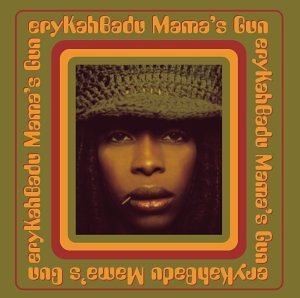
#268: Erykah Badu - Mama's Gun (2000)


Zack: Most of my prior exposure to Erykah Badu consisted of listening to Things Fall Apart by The Roots over and over and over again. As much as I love her in that song, I really wasn’t in the mood to listen to a neo-soul album at the time, especially a 71 minute one. But I sucked it up and now I sort of wish I hadn’t. I liked Mama’s Gun, but it just felt so long. Like they could have cut out a whole chunk in the middle and it would have been so much better. It was just too hard to stay focused for the entire time, especially when I didn’t recognize any of the songs to begin with like I did for other artists, like Lauryn Hill. I plan on going back and listening to some songs over again to see if my apathy was earned or sentenced, but I’m definitely not promising to do so with the entire album. I’ve got a life to live.
Favorite Tracks: Penitentiary Philosophy; Bag Lady; Green Eyes

Emily: I don't really know much about Erykah Badu besides her penchant for wearing brightly colored African hair wraps, and that she has a son with Andre 3000 named Seven (yes, like the number). With a quick scan of Wikipedia, I learned that she also has a daughter named Puma (yes, like the animal and/or sneaker) and another daughter named Mars (and yes, like the planet). All celebrity fun facts aside, I also spent the last hour listening to Mama's Gun, one of Badu's most critically acclaimed albums. I agree with Zack that it was overlong, and that a few songs in the middle could have been taken out with no impact on the quality of the music. However, despite it being a lengthy undertaking, Mama's Gun is a beautifully modern soul album. Badu's voice has a classic quality to it, less Aretha and more Billie Holiday. Mixed with modern subject matter and smooth rhythms, the album is both unique and timeless.
Favorite Tracks: Penitentiary Philosophy; ... & On; Bag Lady

Wednesday, January 15, 2014

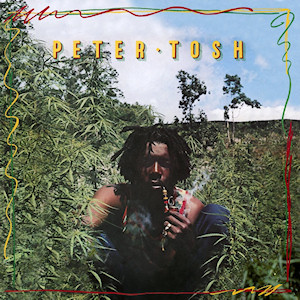
#267: Peter Tosh - Legalize It (1976)


Emily: In my last semester of college, I took a politics in film class with my roommate. It met once a week, and half the time we just watched movies in class. So of course, it was awesome. One of the films we watched was The Harder They Come, the first major film to come out of Jamaica. It's a pretty good movie, but it has an even more awesome reggae soundtrack. The soundtrack is even credited with introducing reggae to American audiences a few years before Bob Marley. For the final project in this class, we had to do a creative project incorporating themes we had covered throughout the semester. I worked with my roommate, and we didn't really want to do much with the project (being in the last weeks of our last semester and all) so we decided to pick up on The Harder They Come and did a presentation about political themes in reggae music. It took about an hour to finish, the last slide had a picture of our rabbit with a Microsoft-Paint-drawn rasta hat, and we still managed to get an A. Again, an awesome class. Perhaps, though, if we had put more effort into our research we would have come across Peter Tosh. Legalize It would have been an interesting song to discuss the political implications of the marijuana trade in post-colonial Jamaica. Early reggae frequently seems to have underlying political themes, so it's a worthwhile exercise to explore with artists like Tosh, who used to play with Bob Marley. On a pure musical front, I didn't think this album was much different than the style of Marley and his peers. I tend to prefer the more upbeat and ska-twinged (but still political) reggae of the early '70s, like Jimmy Cliff (seriously, check out the The Harder They Come soundtrack). Even so, you don't get to apply your liberal arts education every day (well, I don't), so a reggae album lets me do that without even having to make a PowerPoint.
Favorite Tracks: Legalize It; Till Your Well Runs Dry; Burial

Zack: It occurred to us that we haven’t done a reggae album since Gerald Ford was in office, so here we are. The first place I ever heard of Peter Tosh was a VH1 documentary about drug culture that played Legalize It in the background for a scene that (if my memory is correct) was about the illegal importation of marijuana by plane from South America. That song was pretty much made for use in documentaries about drugs. The song should just be called Royalty Checks. With that song in mind, I wasn’t particularly surprised to see the cover art. And I certainly wasn’t surprised to hear the music, which sounded exactly like everyone expects a reggae album to sound like. I wouldn’t be surprised if every song on this album had, at one point or another, been attributed to Bob Marley by some white person who wanted to seem hip. Overall, Legalize It (the album) is a good reggae album worth checking out if that’s what you’re into. If you’re not a real reggae fan but just want to put on something relaxing for an hour, you’d be better off going with the real Bob Marley.
Favorite Tracks: Legalize It; Till Your Well Runs Dry; No Sympathy